
Another Fine Mass
In the days leading up to our concert, Together We Sing, the author of our programme notes provides an alternative look at the pieces featured on Saturday 6th June. The series may be interspersed with other posts but will be more or less daily! We hope you enjoy it.
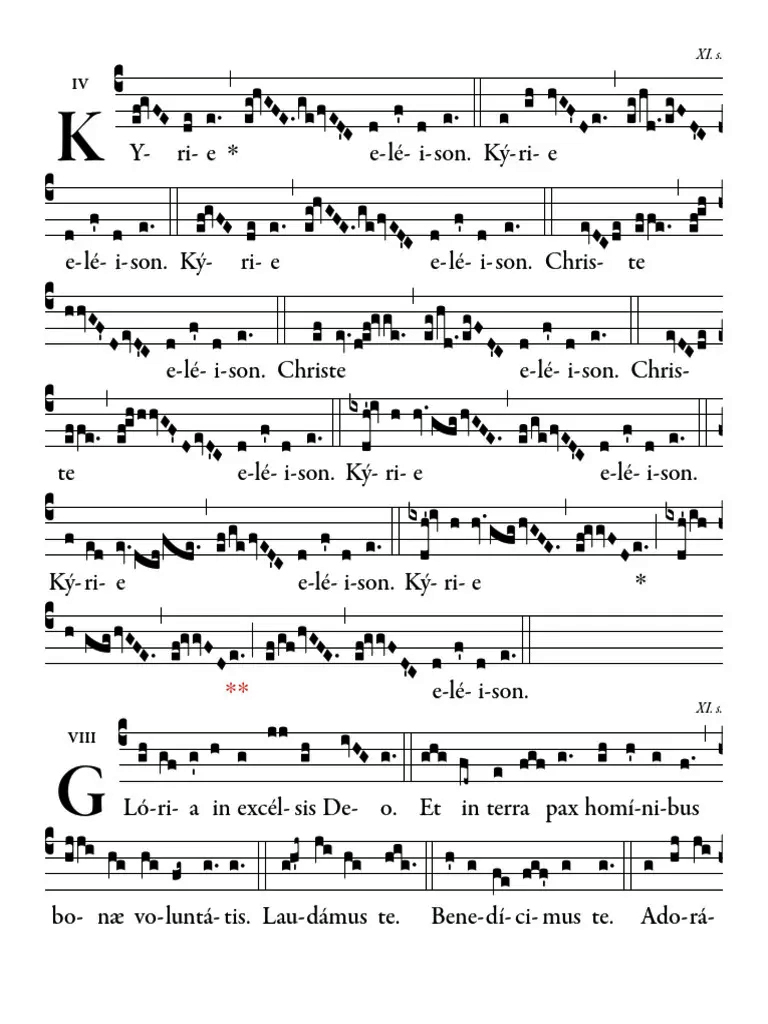
Choirs sing lots of masses. But why, when most of them are in Latin, is the opening movement – the Kyrie (Lord, have mercy) – in Greek?
Kyrie, eleison is the Greek translation of have mercy on me, Lord, a phrase to be found in the third century BC translation of the Hebrew Bible known as the Septuagint. 2,000 years ago, Greek was widely used across the Eastern Mediterranean and so it is not surprising that when the liturgy was first celebrated in Rome it was in Greek. The Kyrie is, therefore, at least in one view, simply a vestige of this opening litany, though why the Kyrie hung around when the rest of the mass opted for Latin is another matter.
Traditionally, mass settings are the Mass Ordinary, that is the Kyrie, Gloria, Credo, Sanctus and the Agnus Dei, although not all composers have divided their works in this way. Some composers, particularly contemporary ones, have also taken a different approach. Karl Jenkins’, The Armed Man: A Mass for Peace, for example, is essentially an anti-war piece, based on the Catholic Mass, which combines the Kyrie, Santus, Agnus Dei and Benedictus with other sources, principally the 15th-century folk song L’homme armé.
The Norwegian composer Gjeilo, Sunrise Mass, uses the Ordinary of the Mass, but the movements are each given English names so that the Kyrie becomes The Spheres, the Gloria, Sunrise, Credo, The City, Sanctus and Agnus Dei, Identity and The Ground. Gjeilo observes the traditions of the mass, but his overall vision for the piece lies within the titles of the work which are only loosely related to their meaning of the Latin and intended to take the listener on metaphysical journey from the heavens to earth.
Leave a Reply